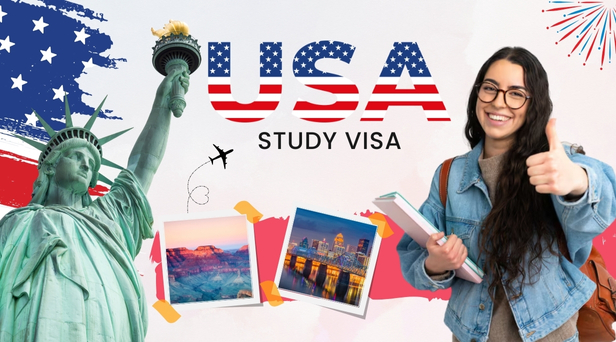
USA Study Visa Requirements for Indian Students 2026–27
The United States remains one of the most sought-after study destinations for Indian students. With globally ranked universities, flexible academic pathways, and strong post-study work options, the USA continues to attract students planning for the 2026–27 intake.
If you are considering studying in the USA, understanding the F-1 student visa requirements is critical. This guide explains the process clearly, without unnecessary complexity, so you know exactly what to prepare.
Understanding the USA Study Visa (F-1)
Indian students pursuing full-time academic programs in the USA must apply for the F-1 student visa. This visa is issued to students admitted to institutions approved under the Student and Exchange Visitor Program (SEVP).
The F-1 visa allows you to:
-
Study full-time in the USA
-
Work part-time on campus during studies
-
Gain post-study work experience through OPT
Basic Eligibility Criteria
To qualify for a USA study visa in 2026–27, you must:
-
Hold a confirmed admission from a US university
-
Enrol in a full-time academic program
-
Demonstrate sufficient financial resources
-
Show clear intent to return to India after completing your studies
Meeting these conditions forms the foundation of a successful visa application.
University Admission and Form I-20
Once you accept your offer, the university issues Form I-20. This is one of the most important documents in your visa process.
The I-20 includes:
-
Course and university details
-
Duration of study
-
Estimated cost of education and living expenses
-
Your unique SEVIS ID
You cannot book a visa interview or enter the USA without a valid I-20.
Financial Requirements for USA Study Visa
You must prove that you can finance at least the first year of study, as mentioned on your I-20.
Accepted financial sources include:
-
Personal or parent bank savings
-
Education loan from a recognised bank
-
Scholarships or assistantships
-
Sponsor affidavit with supporting documents
Financial transparency is closely reviewed during the visa interview, so accuracy matters.
English Language Proficiency
Most US universities require proof of English proficiency. Commonly accepted tests include:
-
IELTS Academic
-
TOEFL iBT
-
PTE Academic
-
Duolingo English Test (accepted by selected universities)
Score requirements vary depending on the institution and program.
Required Academic and Personal Documents
Prepare the following documents carefully:
-
Passport (valid for at least 6 months beyond stay)
-
University offer letter
-
Form I-20
-
Academic transcripts and certificates
-
Statement of Purpose
-
Letters of Recommendation (if required)
-
Resume for postgraduate applicants
Well-organised documentation reflects seriousness and preparedness.
Visa Fees for 2026–27
| Fee Type | Amount |
|---|---|
| F-1 Visa Application Fee | USD 185 |
| SEVIS I-901 Fee | USD 350 |
Both fees are mandatory and non-refundable.
USA Study Visa Application Process
The application process follows a fixed sequence:
-
Receive admission and I-20
-
Pay SEVIS fee
-
Complete DS-160 visa application form
-
Pay visa fee
-
Schedule visa interview
-
Attend interview at US Embassy or Consulate
-
Receive visa decision
Applying early helps avoid delays during peak intake seasons.
Visa Interview: What Matters Most
The visa interview plays a decisive role. Officers focus on:
-
Your academic background
-
Choice of course and university
-
Financial capability
-
Career plans after graduation
-
Strong ties to India
Clear, confident, and honest answers matter more than memorised responses.
Work Opportunities During and After Study
During studies:
-
Up to 20 hours per week of on-campus work
After graduation:
-
Optional Practical Training (OPT): 12 months
-
STEM OPT Extension: additional 24 months (for eligible programs)
These post-study options are a major advantage of studying in the USA.
Common Reasons for Visa Refusal
Some frequent reasons include:
-
Weak academic or career justification
-
Unclear financial arrangements
-
Inconsistent interview responses
-
Poor alignment between past studies and chosen program
Careful preparation significantly improves approval chances.
When Should You Apply?
-
You can apply for the F-1 visa up to 365 days before course start date
-
For Fall 2026 intake, the ideal application window is April to July 2026
The USA study visa for Indian students 2026–27 is straightforward when approached with proper planning. A credible academic profile, clean financial documentation, and confident interview preparation are the pillars of a successful application.
For students aiming for global exposure, cutting-edge education, and strong career outcomes, studying in the USA remains a powerful choice.